Table of Contents
ToggleDigital twins are changing how businesses design, monitor, and optimize physical assets. These virtual replicas connect the physical and digital worlds through real-time data, sensors, and advanced analytics. From manufacturing floors to smart cities, digital twins help organizations predict failures, reduce costs, and improve performance. This guide explains what digital twins are, how they work, which industries use them, and the benefits and challenges they bring.
Key Takeaways
- Digital twins are virtual replicas of physical assets that use real-time data and sensors to mirror behavior, predict failures, and optimize performance.
- Unlike static 3D models, digital twins continuously update to reflect current conditions and simulate future outcomes without physical risk.
- Industries like manufacturing, healthcare, energy, and transportation use digital twins to reduce costs, improve efficiency, and accelerate product development.
- Predictive maintenance powered by digital twins can reduce unplanned equipment outages by up to 50%.
- Key challenges include high implementation costs, data quality requirements, integration complexity, and cybersecurity concerns.
- The global digital twin market is expected to grow significantly through 2030 as adoption expands across sectors.
What Are Digital Twins?
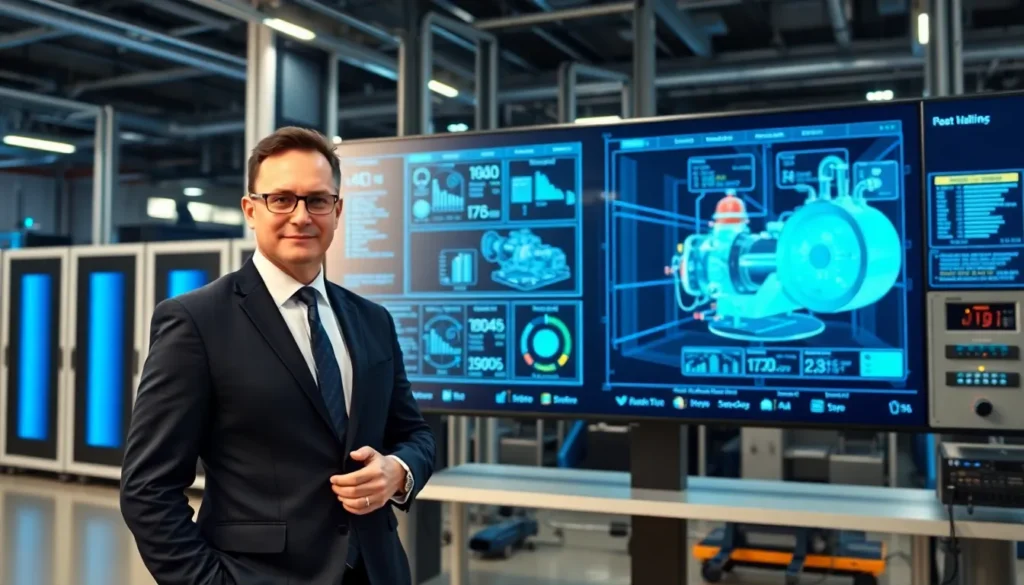
A digital twin is a virtual model of a physical object, system, or process. It mirrors its real-world counterpart using data from sensors, IoT devices, and software systems. The concept originated in manufacturing but now applies to buildings, cities, supply chains, and even human bodies.
Digital twins differ from simple 3D models or simulations. While a 3D model shows what something looks like, a digital twin shows how it behaves. It updates continuously as conditions change in the physical world. This creates a living representation that reflects current states and predicts future outcomes.
There are three main types of digital twins:
- Component twins represent individual parts like a turbine blade or motor.
- Asset twins model entire machines or equipment.
- System twins cover interconnected assets, such as an entire factory or power grid.
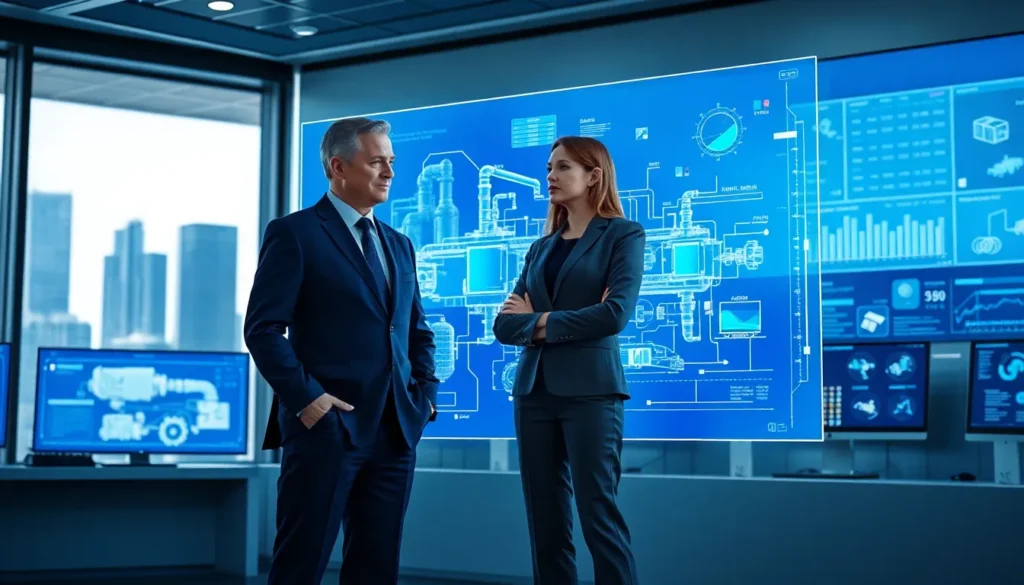
The value of digital twins lies in their ability to test scenarios without risk. Engineers can simulate stress tests, maintenance schedules, or design changes before applying them to actual equipment. This reduces trial-and-error costs and speeds up decision-making.
How Digital Twin Technology Works
Digital twin technology relies on a combination of hardware, software, and connectivity. The process starts with sensors attached to physical assets. These sensors collect data on temperature, pressure, vibration, location, and other variables.
This data flows to a cloud or edge computing platform where the digital twin resides. Software processes the incoming information and updates the virtual model in real time. Machine learning algorithms analyze patterns, detect anomalies, and generate predictions.
Here’s a simplified breakdown of the digital twin workflow:
- Data collection: IoT sensors gather operational data from the physical asset.
- Data transmission: Networks send this data to processing platforms.
- Model updating: The digital twin adjusts to reflect current conditions.
- Analysis and simulation: AI and analytics tools interpret data and run scenarios.
- Action: Insights inform maintenance, design changes, or operational adjustments.
Digital twins require accurate data to function properly. Poor sensor calibration or network delays can reduce their effectiveness. Integration with existing IT and OT systems also presents technical hurdles, but modern platforms are improving interoperability.
The technology continues to advance. Newer digital twins incorporate augmented reality for visualization, allowing technicians to overlay digital information onto physical equipment. This makes inspections faster and more accurate.
Key Industries Using Digital Twins
Digital twins have found applications across many sectors. Their ability to model complex systems makes them valuable wherever physical assets need monitoring and optimization.
Manufacturing
Manufacturing was the first industry to adopt digital twins at scale. Factories use them to monitor production lines, predict equipment failures, and optimize workflows. A digital twin of an assembly line can identify bottlenecks and suggest process improvements before they cause delays.
Healthcare
Healthcare organizations create digital twins of organs, patients, and hospital systems. Surgeons use organ twins to plan complex procedures. Hospitals model patient flow to reduce wait times and improve care delivery. Pharmaceutical companies simulate drug interactions using virtual patient models.
Energy and Utilities
Power plants and utility companies rely on digital twins to manage aging infrastructure. Wind farms create twins of individual turbines to track performance and schedule maintenance. Smart grids use system-level twins to balance supply and demand in real time.
Construction and Real Estate
Building information modeling (BIM) has evolved into full digital twins for construction projects. These models track progress, identify design conflicts, and support facility management after completion. Smart buildings use twins to optimize energy consumption and occupant comfort.
Transportation
Automotive manufacturers test vehicle designs with digital twins before building prototypes. Airlines model aircraft systems to improve maintenance schedules. Cities create twins of transportation networks to manage traffic and plan infrastructure upgrades.
Adoption rates vary by industry, but analysts expect the global digital twin market to grow significantly through 2030 as more organizations recognize the technology’s potential.
Benefits and Challenges of Digital Twins
Digital twins offer significant advantages, but they also come with obstacles that organizations must address.
Benefits
Predictive maintenance: Digital twins analyze sensor data to predict when equipment will fail. This allows maintenance teams to fix problems before they cause downtime. Studies show predictive maintenance can reduce unplanned outages by up to 50%.
Faster product development: Engineers can test designs virtually, cutting the number of physical prototypes needed. This accelerates time-to-market and lowers development costs.
Improved operational efficiency: Real-time monitoring identifies inefficiencies and suggests optimizations. Factories using digital twins report productivity gains of 10-25%.
Better decision-making: Simulations let stakeholders evaluate options with accurate data rather than guesswork. This reduces risk and improves outcomes.
Sustainability gains: Digital twins help organizations track energy use and emissions. They support efforts to reduce waste and meet environmental targets.
Challenges
High implementation costs: Building a digital twin requires investment in sensors, software, and expertise. Small and mid-sized businesses may struggle to justify the expense.
Data quality issues: Digital twins are only as good as their data. Incomplete or inaccurate inputs lead to unreliable outputs.
Integration complexity: Connecting digital twins with legacy systems can be difficult. Many organizations lack the technical infrastructure to support seamless data flows.
Security concerns: Digital twins create new attack surfaces for cyber threats. Protecting sensitive operational data requires strong security measures.
Skill gaps: Operating digital twins demands expertise in data science, IoT, and domain-specific knowledge. Finding qualified talent remains a challenge for many companies.