Table of Contents
ToggleDigital twins strategies have become essential for businesses seeking competitive advantages through virtual modeling. A digital twin creates a real-time virtual replica of physical assets, processes, or systems. Organizations use these digital models to simulate scenarios, predict outcomes, and optimize operations before making costly real-world changes.
The global digital twin market reached $17.73 billion in 2024 and continues to grow rapidly. Companies across manufacturing, healthcare, and urban planning now rely on digital twins strategies to reduce costs and improve decision-making. This guide covers the core concepts, implementation approaches, common obstacles, and industry applications that define successful digital twin adoption.
Key Takeaways
- Digital twins strategies create real-time virtual replicas of physical assets, enabling organizations to simulate scenarios and optimize operations before making costly changes.
- Successful digital twin implementation depends on strong data integration, clear governance policies, and infrastructure that supports continuous real-time data processing.
- The global digital twin market reached $17.73 billion in 2024, with manufacturing, healthcare, energy, and smart cities leading adoption.
- Common challenges include legacy system integration, skills gaps, and organizational resistance—start with pilot projects to prove ROI before scaling.
- Future-proof your digital twins strategies by choosing cloud-based platforms, open standards, and modular architectures that avoid vendor lock-in.
- Industries like manufacturing have achieved measurable results, with one automotive company reducing unplanned downtime by 30% through digital twin implementation.
Understanding Digital Twin Technology
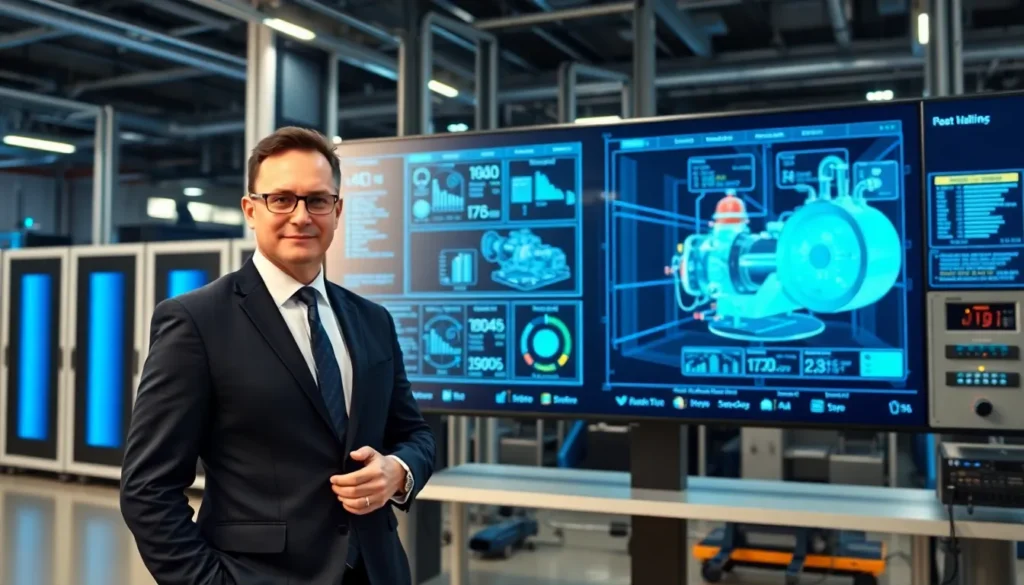
A digital twin functions as a dynamic virtual model that mirrors a physical counterpart in real time. It connects to sensors, IoT devices, and data streams to maintain an accurate representation of its physical twin. This connection allows organizations to monitor performance, detect anomalies, and test changes without disrupting actual operations.
Digital twins strategies rely on three core components. First, the physical entity, this could be a machine, building, supply chain, or entire city. Second, the virtual model that receives and processes data from the physical source. Third, the connection layer that enables continuous data exchange between both elements.
The technology differs from traditional simulation. While simulations run hypothetical scenarios based on static data, digital twins update continuously. They learn from real-world conditions and adjust their models accordingly. This makes digital twins strategies particularly valuable for predictive maintenance, process optimization, and risk assessment.
Modern digital twins incorporate machine learning algorithms that identify patterns humans might miss. They can predict equipment failures weeks in advance, recommend efficiency improvements, and simulate the impact of proposed changes. Organizations that carry out digital twins strategies effectively gain visibility into operations that was previously impossible.
Key Strategies for Successful Digital Twin Implementation
Successful digital twins strategies require careful planning and execution. Organizations must address data management, scalability, and long-term adaptability from the start.
Data Integration and Management
Data quality determines digital twin effectiveness. Poor data produces unreliable models that lead to bad decisions. Organizations should establish clear data governance policies before implementation begins.
Digital twins strategies depend on integrating data from multiple sources. Sensors, enterprise systems, historical databases, and external feeds must connect seamlessly. Many organizations struggle here because their data exists in silos. Breaking down these barriers requires both technical solutions and organizational commitment.
Real-time data processing presents another challenge. Digital twins need current information to provide accurate insights. This means investing in infrastructure that can handle continuous data streams without lag. Edge computing helps by processing data closer to its source, reducing latency and bandwidth requirements.
Data security also demands attention. Digital twins contain sensitive operational information. Organizations must protect this data through encryption, access controls, and regular security audits. A breach could expose proprietary processes or create vulnerabilities in connected physical systems.
Scalability and Future-Proofing
Effective digital twins strategies account for growth. A solution that works for one factory must expand to cover ten. Organizations should choose platforms and architectures that scale without requiring complete rebuilds.
Cloud-based infrastructure supports scalability for most digital twins strategies. It provides flexible computing resources that grow with demand. But, some applications require on-premises deployment for security or latency reasons. Hybrid approaches often work best.
Future-proofing means selecting open standards and avoiding vendor lock-in. Digital twin technology evolves quickly. Organizations need the flexibility to adopt new capabilities without abandoning their existing investments. APIs, modular architectures, and industry-standard protocols help maintain this flexibility.
Documentation matters too. Digital twins strategies that succeed long-term include thorough documentation of data models, integration points, and business logic. This documentation helps new team members understand the system and facilitates future modifications.
Common Challenges and How to Overcome Them
Organizations implementing digital twins strategies face several recurring obstacles. Understanding these challenges helps teams prepare effective responses.
Legacy system integration ranks among the most common difficulties. Older equipment often lacks the sensors and connectivity needed for digital twin implementation. Retrofitting this equipment can be expensive. Organizations should prioritize assets where digital twins deliver the highest return on investment. They can then fund broader rollouts with those initial gains.
Skills gaps create another barrier. Digital twins strategies require expertise in data science, IoT, software development, and domain-specific knowledge. Few organizations have all these skills in-house. Partnerships with technology vendors, consulting firms, or academic institutions can fill these gaps.
Organizational resistance sometimes slows adoption. Employees may view digital twins as threats to their jobs or question the technology’s value. Clear communication about goals and benefits helps address these concerns. Involving frontline workers in implementation increases buy-in and often improves outcomes.
Cost justification challenges many organizations. Digital twins strategies require significant upfront investment in sensors, platforms, and expertise. Demonstrating ROI can be difficult before implementation begins. Starting with pilot projects allows organizations to prove value on a smaller scale before committing to larger deployments.
Data accuracy issues undermine trust in digital twins. If the virtual model doesn’t match reality, users lose confidence. Regular validation against physical conditions helps maintain accuracy. Automated alerts can flag discrepancies that need investigation.
Industries Benefiting From Digital Twins
Digital twins strategies deliver value across numerous sectors. Each industry adapts the technology to address its specific needs.
Manufacturing leads digital twin adoption. Factories use virtual models to optimize production lines, predict equipment failures, and test process changes. One automotive manufacturer reduced unplanned downtime by 30% after implementing digital twins strategies for its assembly equipment.
Healthcare applies digital twins to patient care and hospital operations. Virtual patient models help doctors test treatment options before procedures. Hospital administrators use digital twins to optimize bed allocation, staff scheduling, and supply management.
Energy and utilities rely on digital twins strategies for grid management and asset maintenance. Power companies model their distribution networks to identify vulnerabilities and plan upgrades. Wind farm operators use digital twins to maximize energy production and schedule maintenance during low-wind periods.
Smart cities represent a growing application area. Urban planners create digital twins of entire metropolitan areas to simulate traffic patterns, emergency response scenarios, and infrastructure changes. Singapore’s Virtual Singapore project demonstrates how digital twins strategies can inform city-wide decision-making.
Construction and real estate use digital twins throughout building lifecycles. Developers simulate building performance during design. Operators use the same models for ongoing facility management after construction. This continuity reduces costs and improves building performance.